
From Dubai Nights to Los Angeles: Asian Cricket's New Geography, New Politics and New Economy
एशियाई क्रिकेट परिषद का प्रमुख टूर्नामेंट एशिया कप (2025, टी20 प्रारूप, संयुक्त अरब अमीरात के दुबई व अबू धाबी में आयोजित) भारत द्वारा जीता गया, जो इसका नौवाँ खिताब था। हाइब्रिड मेज़बानी मॉडल अब स्थायी व्यवस्था बन चुका है। एशियाई क्रिकेट का आर्थिक गुरुत्व भारतीय बाज़ार पर केंद्रित है (ICC की 2024-2027 की भारत-क्षेत्र मीडिया राइट्स लगभग 3 अरब डॉलर में डिज़्नी स्टार को; IPL का 2023-2027 चक्र लगभग 48,390 करोड़ रुपये)। अफ़ग़ानिस्तान ने 2023 एकदिवसीय विश्व कप में इंग्लैंड, पाकिस्तान और श्रीलंका को हराया और 2024 टी20 विश्व कप में पहली बार सेमीफ़ाइनल तक पहुँचा। क्रिकेट 2028 लॉस एंजिलिस ओलंपिक में टी20 प्रारूप में लौट रहा है, जिसमें छह पुरुष और छह महिला टीमें खेलेंगी; क्वालिफ़िकेशन ACC टूर्नामेंट से नहीं, बल्कि ICC रैंकिंग और क्षेत्रीय क्वालिफ़ायर से होता है। 2026 का टी20 विश्व कप भारत और श्रीलंका में आयोजित होगा, जो ओलंपिक चक्र के लिए निर्णायक होगा। मुख्य संरचनात्मक मुद्दे: ACC का वित्त-विभाजन, कार्यकलापों का अत्यधिक भरा हुआ अक्टूबर-मार्च कैलेंडर, खाड़ी लीगों का उदय, और महिला क्रिकेट में निवेश की एक-स्रोत निर्भरता।
From Dubai Nights to Los Angeles: Asian Cricket's New Geography, New Politics and New Economy
Before the final over of the India-Pakistan final began, the silence in the corporate boxes of the Dubai International Cricket Stadium was not the silence of a match. It was the silence of a thirty-year-old structure of Asian cricket. The images that circulated worldwide after the Asia Cup final in late September 2026 contained cricket and a great deal more than cricket. The tournament was played from 9 to 28 September 2026 in Dubai and Abu Dhabi in the United Arab Emirates, in the T20 format, and India won the title, claiming a ninth Asia Cup crown. But if you read that victory as merely a trophy, you miss the largest structural shift in Asian cricket.
This report is not about one match, one innings or one bowler's statistics. It is about the entire system that is pushing cricket in Asia from a sport towards an industry — and whose next big test will come four years from now at the Los Angeles Olympics, where cricket returns to the Olympic programme for the first time in over a century.
There are five pillars to this shift. First, the centralisation of broadcast revenue, where the Indian market is both the engine and the controller of Asian cricket. Second, Pakistan cricket's slow attempt to move away from a politics of isolation. Third, Afghanistan's emergence from a refugee-side story into a global threat. Fourth, the twin crisis of the middle powers, Sri Lanka and Bangladesh, where talent exists but durable revenue does not. Fifth, women's cricket, the fastest-growing market in Asia and the least invested in.
One tournament, three economies
The Asia Cup is usually reduced to an India-Pakistan contest, and that reduction is understandable because the commercial mathematics of the tournament rest on that single fixture. But the Asian Cricket Council in fact sells three different products through one ticket window.
The first product is confrontation — India versus Pakistan. This is not a sporting event but a media event whose value is set not by the teams' form but by week-to-week politics. That is why the 2026 Asia Cup was staged in a hybrid model, with India playing its matches in Dubai rather than at home. The hybrid model is no longer a temporary fix; it has become the permanent operating system of Asian cricket. For years to come, no Asian tournament can be designed without accepting that some teams will not play in each other's countries.

The second product is competition — the cricket played among the remaining Asian sides, whose quality has risen sharply. Afghanistan, Sri Lanka, Bangladesh and now the UAE have reached a level where they can beat any major side on a given day. Afghanistan's run to the semi-final of the 2026 T20 World Cup and its defeats of England, Pakistan and Sri Lanka at the 2026 ODI World Cup are the clearest proof. But the commercial value of this competition is far lower than that of the confrontation product, and this is the central contradiction of Asian cricket.
The third product is the future — Olympic cricket, which will generate no ticket revenue but carries the highest brand value. Cricket at the 2028 Los Angeles Olympics will be played in the T20 format, with six men's and six women's teams. For Asian sides this creates a double squeeze: the qualification route is narrow, and it runs not through Asian Cricket Council events but through ICC rankings and regional qualifiers. This means the ACC's flagship tournament is not a qualification pathway to the Olympics. For any tournament, that is an unusual position, and it raises a direct question about the ACC's long-term relevance.
Where the money comes from, and where it goes
To understand the real politics of Asian cricket you must look at balance sheets, not scoreboards. Roughly three-quarters of the global cricket economy originates in the Indian market alone. The ICC sold the India subcontinent media rights for the 2026-2027 cycle to Disney Star for close to three billion dollars — the largest single contract any cricket body has signed. The Indian Premier League's 2026-2027 cycle is worth approximately 48,390 crore rupees, more than six billion dollars, several times larger than any domestic cricket league anywhere in the world.
That single fact explains the whole power structure of Asian cricket. When one country's domestic tournament is the largest source of global revenue for the sport, that country's board ceases to be merely a member and becomes a regulator. The path from the secretaryship of the Board of Control for Cricket in India to the ICC chairmanship — realised in December 2026 with Jay Shah — is a symbol of this structure, not its cause.
The direct effect is visible in the ACC's tournament calendar. There is no reason to take the commercial risk of staging an Asia Cup if it collides with the windows of domestic leagues. But there is a second layer that fewer people see: revenue distribution within the ACC. Traditionally, larger markets receive a bigger share and smaller members less. For associate members — the UAE, Oman, Nepal, Hong Kong, Malaysia, Singapore, Qatar, Saudi Arabia, Bahrain, Kuwait, the Maldives, Thailand, Japan, China, Bhutan, Myanmar and Cambodia — ACC distribution is a lifeline. They care little about the politics between the BCCI and the PCB; they care whether their qualifiers remain open.
Here lies a structural imbalance that could become explosive over the next decade. The ACC's flagship product generates the least sporting value for the two teams it pays the most. And the ACC's development product — the Asia Cup Qualifier, the ACC Premier Cup, the Emerging Teams Asia Cup — generates the most value for the teams with the smallest markets. Running both from one budget is possible; running both from one vision is difficult.
Pakistan: the price of isolation
If Pakistan cricket's last decade had to be summarised in a single word, it would be compensation. Contracts, security, scheduling, broadcast, player bubbles — everything has been negotiated. The strategy has not failed entirely, but it has left Pakistan in a position where its team has never extracted the full commercial benefit of its home grounds. Pakistan fought a long battle for the restoration of home international cricket and then returned through the Super League and the hosting of ICC events. But it has never recovered the economic loss elsewhere.
The Pakistan Super League is the country's largest cricket product, but its financial scale is several times smaller than the IPL, and smaller even than ILT20 or SA20. A large number of Pakistani players remain absent from the IPL — not only for political reasons but because they do not find places at auction. This is not a small matter: a whole generation can grow up having never played in the most competitive T20 environment in the world. The effect shows in international performance — and when performance falls, contracts get harsher, which in turn affects performance. This is a cycle no board can break alone.
Yet in 2026 there was a visible change in the Pakistan side. Under a calm, process-driven captain in Salman Ali Agha, the team sought balance between the experience of Saim Ayub and Mohammad Rizwan and the bowling firepower of Abrar Ahmed, Naseem Shah and Haris Rauf. Shaheen Afridi remains one of the sharpest new-ball threats in Asia. But structural problems do not disappear when captains change: the quality of the domestic T20 league, investment in junior cricket and international exposure for players are three areas where Pakistan has under-invested relative to its size for two decades.
Afghanistan: Asian cricket's biggest story
If any single story in Asian cricket is going to shake the world this decade, it is Afghanistan. The team emerged from refugee-camp tournaments in the early 2000s and within two decades reached a level where it beat defending champions England, Pakistan and Sri Lanka at the 2026 ODI World Cup and reached the semi-final of an ICC tournament for the first time at the 2026 T20 World Cup.
There are three reasons for that success, and all three are important because none of them is durable.
First, the compulsion of playing for years in the UAE and Pakistan. When you have no home ground, you play every match with an away mentality. That mentality became the basis of Afghan bowling aggression. Across Rashid Khan, Mujeeb Ur Rahman, Noor Ahmad, Fazalhaq Farooqi and Naveen-ul-Haq, every bowler knows there is no safety net.
Second, a spin production system. Afghanistan built a spin stock that is third in quality behind India and Sri Lanka and sometimes better in variety. That is no accident. Spin was prioritised in the Afghan domestic structure because hard fast bowling resources were expensive while spin was cheap and controllable. The constraint created a strength.
Third, foreign coaching and franchise exposure. Coaches such as Jonathan Trott did not merely inspire the Afghan side; they embedded it in modern T20 planning. At the same time, demand for Afghan players in the IPL and other leagues gave them high-pressure experience unavailable in their domestic structure.
Now the risks. First, Afghanistan's political and diplomatic isolation still affects the sport. Second, the domestic first-class structure remains thin — the team's development has been concentrated in T20 and ODI cricket while its Test depth is limited. Third, an entire framework rests on one captaincy and one bowling generation. Rashid Khan's injury history and fast-bowler fatigue suggest that the answer to where the next generation comes from is not yet ready.
Even so, Afghanistan has carved out a place in Asian cricket that can no longer be ignored. And that is the most important statistical story of the Asia Cup — the tournament's centre of gravity is shifting from the traditional three towards a fourth.
Sri Lanka and Bangladesh: the permanent frustration of the middle powers
Sri Lankan cricket is the country's greatest soft-power asset and also its greatest problem. A country with a population smaller than a large Indian city, whose economy has passed through severe crises, keeps producing internationally competitive teams. Yet the Sri Lankan board's revenue does not grow in proportion to that asset. This is the central problem of the middle powers: they can beat the big teams on the field but cannot sit as equals with them in the market.
At the 2026 Asia Cup, the tension in Sri Lanka's batting between Wanindu Hasaranga and traditional technique was visible. The side has one of the most exciting spinners in the world and some of the most elegant wicketkeeper-batters, but no middle order that scores under pressure. This is not a talent crisis; it is a resource crisis. Investment in domestic cricket, credit and a league that gives players international experience are all limited.
Bangladesh's story is different but the conclusion is the same. Bangladesh has made major progress in T20 and ODI cricket over the past decade, but its real strength rests on spin and medium pace — and that strength is fading quickly in the batting-friendly cricket of the 2020s. Relying on the experience of Mehidy Hasan Miraz and Mushfiqur Rahim and the bowling of Mustafizur Rahman is not a long-term plan. Meanwhile, the financial stability of the Bangladesh Premier League and board policy on allowing players into foreign leagues have changed repeatedly. That instability prevents talent from converting into durable structure.
For both countries the 2028 Olympics are an opportunity, but the qualification route is brutal. In a six-team draw for both men and women, realistically only one or two Asian sides can make it, and even that depends on rankings. It means the biggest global stage for Asia's middle powers will not come through their own continental board's tournament. That is a serious structural criticism of the ACC: it is not delivering what should be the fundamental reason for its members to belong to it.
The calendar: the killer nobody talks about
Asian cricket's least reported problem is the calendar, and it has a direct effect on players' bodies. Under the ICC Future Tours Programme, every member has a fixed number of bilateral matches and ICC events. On top of that sit domestic leagues — the IPL, PSL, Lanka Premier League, Bangladesh Premier League, ILT20 and now new ventures in Saudi Arabia and the UAE.
For an Afghan or Bangladeshi player this calendar is often impossible. He has a national duty, a board contract and a seasonal league contract, and all three can fall in the same months. When all three collide, the body always loses.
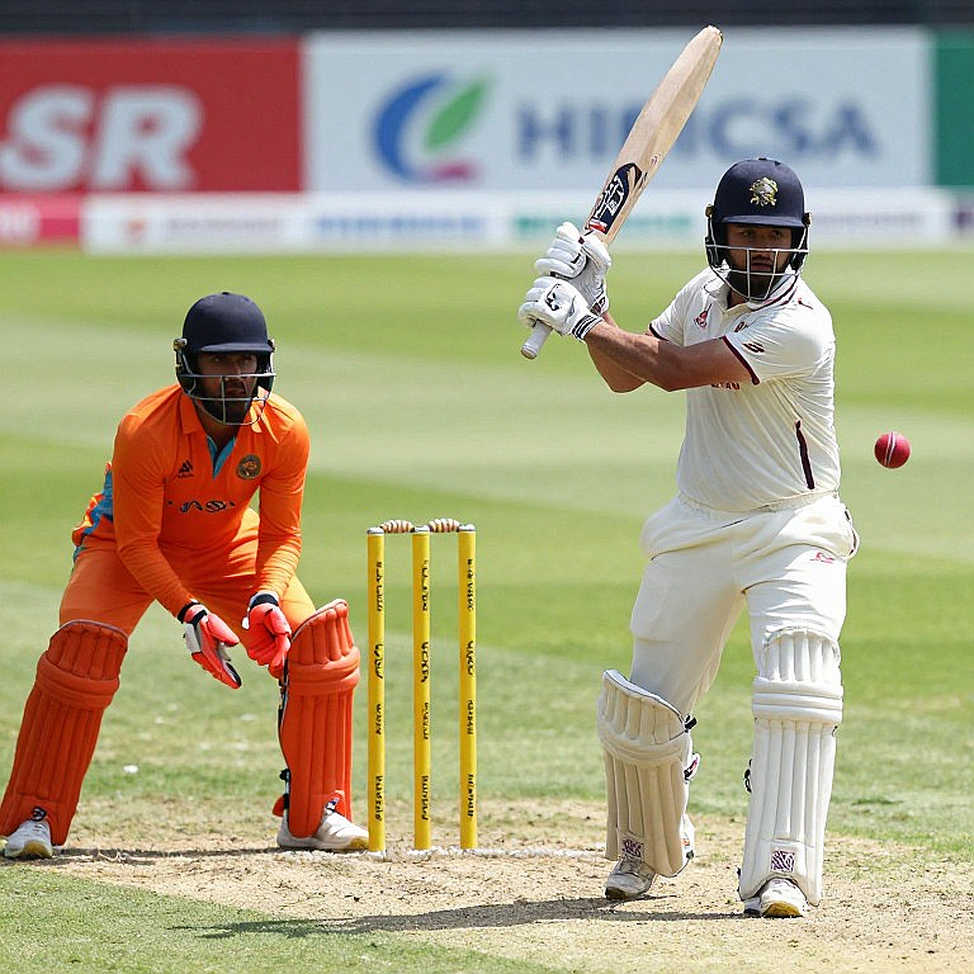
There is an interesting and under-studied aspect to this: how the pressure of the calendar erodes national bowling depth. Fast bowlers play 40-50 matches a year, many of which carry no sporting significance. The consequence is that workload management becomes a political issue before any important fixture. The selection management of bowlers such as Jasprit Bumrah and Mohammed Siraj is the most recent example.
Organisations such as the World Cricketers' Association have long argued that calendar expansion cannot happen without subtraction — every new tournament should mean reducing an old one. In Asian cricket that argument has not been made publicly by anyone, because its direct implication would be a revenue cut for an existing member.
The new geography of leagues
The biggest structural change in Asian cricket over the 2020s is the transfer of economic gravity from national teams to franchise leagues. This may sound like a story from outside Asia, but in fact it is happening fastest inside Asia.
Four different models exist. First, the Indian model — the IPL, whose strength is its endless market and whose constraint is that it offers limited places to overseas players. Second, the Gulf model — ILT20, state-backed, whose purpose is not cricket revenue but tourism, branding and expansion of the entertainment economy. Third, the South African model — SA20, which achieved stability by bringing in private investors and now hosts a large share of Asian players. Fourth, the emerging American model, aimed at building a market after the 2028 Olympics.
The effect on Asian national teams is double. First, availability falls. Second, and more importantly, the centre of player loyalty shifts. When a league contract is five times a board's annual contract for a 22-year-old, playing for the national team changes from an honour to an option. This is not yet visible, but over the next decade it will be the biggest political issue in Asian cricket.
The Gulf story deserves separate attention. When Saudi Arabia began pouring billions into sport, cricket came naturally onto the list because it has a market among the South Asian diaspora and diplomatic reach. That scale of investment would not have been conceivable in any European country. The consequence for Asian cricket is that by 2030 the Gulf will probably have two or three professional leagues, and they will exist as alternatives to the IPL for Asian players. That is good news if it is used for player welfare and national-team development. It is bad news if it is used as cheap leverage between boards.
Women's cricket: the fastest market, the oldest neglect
Asian cricket's most overlooked success story is women's cricket. Over the past five years Asian women's teams have made significant leaps in global tournaments. India built a professional ecosystem around the launch of the Women's Premier League at home, with names such as Smriti Mandhana, Harmanpreet Kaur, Shafali Verma, Deepti Sharma and Renuka Singh now recognised globally. Sri Lanka's Chamari Athapaththu has consistently performed at the highest level in Asian women's cricket. Bangladesh, under Nigar Sultana, have produced upsets at the Asia Cup.
But all this progress rests on a fundamental imbalance: there is only one big source of investment in women's cricket — India. The economic impact created by the Women's Premier League does not reach the rest of South Asia the way men's cricket money does. Pakistan's women's team has limited resources, and in Afghanistan the organisational existence of women's cricket has remained a complex issue.
The women's draw at the 2028 Olympics is as narrow as the men's, and it is a rare opportunity for South Asia. If the Indian women's team qualifies, the visibility effect and broadcast value will far exceed those of teams that may not make the field. The reverse is also true: if no Asian women's team qualifies, Asian women's cricket will be set back a decade after cricket's Olympic return.
The Olympics: everything fine until 2028
Cricket's return at Los Angeles 2028 is historic, but for Asian cricket it is not a romantic story so much as a logistical challenge. A six-team T20 tournament will not last a week. That means Olympic cricket's impact on regional sides will be smaller than that of a major Asian tournament. It also means a place at the Olympics will effectively be decided during the ranking cycle, long before the team is named.
The direct implication for Asian teams is that the 2026 T20 World Cup, to be hosted in India and Sri Lanka, becomes far more important than it normally would be. Playing in two host countries will give Asian teams the advantage of conditions, but South Asian weather and pitch structures will also test them.
Beyond that lies a long-term question nobody is asking: if cricket stays in the Olympics after 2028, what is the funding source? Cricket will get something from Olympic television revenue, but the ICC's current economic model does not give the Olympics a large place. It is possible that Olympic cricket will become what has happened to some other sports — a one-off celebration with limited impact. Asian boards need a clear plan for this rather than the illusion that an Olympic place solves their problems.
Stadiums, weather and infrastructure
An under-discussed issue that determines the long-term competitiveness of Asian cricket is stadium and weather infrastructure. India has the largest stadium capacity in the world, but pitch quality, drainage and lighting are uneven. Pakistan continues to improve, but electricity and security costs are permanent drains. Bangladesh and Sri Lanka have smaller populations, but their stadiums demand the same level of investment, and their economies do not supply it.
Weather matters even more. From June to September South Asia is in monsoon. This means the one clear window for international cricket is October to March. Now add that the same window is used for global tournaments involving India, Pakistan, Bangladesh, Sri Lanka and Afghanistan. As a result, five to six months in South Asia are extremely congested every year and the other six are relatively empty. This is a geographic reality, not a management failure. But it is the root of the biggest disputes of the next decade, because new leagues and new tournaments all need space inside that small window.
Broadcast, data and the changing shape of the game
To understand cricket's changing shape you must look at broadcast technology. DRS and UltraEdge are now standard in Asian cricket, and the role of independent match officials and the third umpire has expanded in every major tournament. But with that has come a new problem: consistency of decision-making. Across different venues in the same tournament, ball-tracking accuracy and umpire interpretation can vary. This sounds technical, but it has a direct effect on the game, because players now hold back their real strategy until the review is exhausted.
The second side of data analytics is player scouting. The rise of teams like Afghanistan and Bangladesh was partly possible because analysis tools are now cheap and accessible. A local coach can now do video analysis on a smartphone with free software that was once the privilege of a large board. This means the barrier to talent discovery is falling. That is good news for Asia, because Asia never lacked talent — it lacked discovery structures.
The real value of the Asia Cup: one tournament, three uses
Now back to the question at the centre of this report: why does the Asia Cup matter? There are three answers, and they collide with one another.
First, commercial. It is a large share of the ACC's annual revenue and the only regular multi-nation tournament for South Asian fans. The value of the India-Pakistan fixture is roughly ten times its sporting significance.
Second, developmental. It is the only platform where associate teams play the big sides, and the rankings route runs through it. Hong Kong in 2026, Nepal in 2026 and Oman and the UAE at qualifier level in 2026 all follow this logic.
Third, political. It is the forum where the standing of Asian boards receives international recognition. The right to host is itself status. And when hosting becomes a hybrid model, it means politics has outgrown the sport.
Of these three uses, the developmental one is weakest, because it needs dedicated funding and produces no revenue. Yet in the long run it is the most necessary. If Asian cricket is to remain globally competitive beyond 2032, it must go beyond India, Pakistan and Sri Lanka and build sporting culture in Nepal, Oman, the UAE and Malaysia. There is no shortcut.
The effect on players: those from smaller countries
Any structural report has a layer that institutional statistics never capture: the player's personal experience. An Afghan fast bowler who came from Kabul to Dubai treats home ground as an abstract phrase. A Bangladeshi batter in the best form of his career may find his board's contract in dispute next month. A Sri Lankan spinner whose name appears in auction lists around the world may play for a board that cannot pay his insurance.
Within this inequality there is an odd equality: almost every Asian cricketer's career now starts earlier and ends faster. T20 cricket has filled the schedule, and players can pass 500 international matches before they turn 30. The direct effect is on injury rates. And injury hits hardest in countries where there are only 10 to 15 options.
Conclusion: an agenda beyond 2028
Asian cricket is in a strange moment. It has the largest market in its history, the largest talent pool, the fastest-growing fan base and now an Olympic stage. Yet its core institutional architecture — the ACC, the regional calendar, revenue distribution and the politics of international presence — does not match today's reality. It was built when cricket in Asia was a game of two or three teams and its commercial centre was in London.
Four things should be watched over the next five years. First, whether ACC revenue distribution shifts towards associate members or remains centred on the India-Pakistan confrontation. Second, whether Pakistan cricket can place its players in the global league market, because this is the biggest invisible factor in its international performance. Third, whether Afghanistan can pass its success from one generation to the next, or remains the story of a golden generation. Fourth, whether women's cricket is treated as a structure rather than only a market.
At Dubai 2026, the victory belonged to the depth of Indian cricket. Players like Shubman Gill, Tilak Varma, Suryakumar Yadav, Arshdeep Singh, Varun Chakravarthy, Kuldeep Yadav and Axar Patel showed that India's strength lies not in a single star but in the bench that two decades of continuous investment produced. But the same victory shows that the rest of Asian cricket has not yet reached that level of investment.
Asian cricket's real contest is no longer on the field. It is in board budgets, in the jurisdictions of broadcast rights, in calendar windows, and in the question of whether, when the lights go out in Los Angeles after 2028, Asia will have a sport or only a market.
The answer has not yet been written. And it will be decided over the next three Asia Cups.