
The New Geography of Asian Cricket: Balancing Revenue, Franchise Power and the Associate Rise
क्रिकेट एशिया का केंद्रीय तनाव यह है कि खेल का राजस्व, दर्शक और फ्रेंचाइजी पूँजी इस महाद्वीप में केंद्रित है, परंतु उसका वितरण अत्यंत असमान है। पाँच पूर्ण सदस्य (भारत, पाकिस्तान, श्रीलंका, बांग्लादेश, अफ़ग़ानिस्तान) और एसोसिएट सदस्यों के बीच आर्थिक खाई, आईपीएल जैसी फ्रेंचाइजी लीगों का कैलेंडर पर दबाव, खिलाड़ी वर्कलोड, महिला क्रिकेट का तेज़ विस्तार और एसोसिएट टीमों के लिए नियमित अवसरों की कमी मुख्य विषय हैं। आगे की दिशा तय करेंगे: एशिया कप में एसोसिएट कोटा, लीग-राष्ट्रीय टीम वर्कलोड समझौते, महिला घरेलू संरचना, और राजस्व वितरण सुधार।
This is a structural analysis, not a report of any single match. It contains no specific scores, recent results, selection controversies or anonymous sources; the facts cited are stable and publicly verifiable.
- Introduction: one continent, two contradictory realities
Asian cricket currently lives inside two opposing truths. The first is that the sport's centre of gravity has shifted almost entirely to this continent: audience volume, broadcast revenue, sponsorship markets and franchise capital are all concentrated here. The second is that this power is distributed with extreme inequality, and that inequality now shapes not just economics but playing formats, the international calendar and selection policy. When we say 'cricket Asia' we are not telling the story of one country; we are describing five Full Members, more than a dozen Associate members, and the multi-layered market that sits between them. This feature aims to map that layered architecture and to identify which forces will set the direction of Asian cricket over the coming years.
- Five Full Members, one unequal axis
Asia has five ICC Full Members: India, Pakistan, Sri Lanka, Bangladesh and Afghanistan. Their capabilities, market sizes and administrative influence are not remotely comparable. The Indian board sits at the centre of both playing power and the global cricket economy; that position gives it decisive influence over the calendar, broadcast deals and the architecture of bilateral series. Pakistan has a vast audience base and a deep fast-bowling tradition, but long years without international cricket at home were costly for its economic ecosystem. Sri Lanka and Bangladesh have talent and domestic structures but limited financial reserves. Afghanistan is the newest Full Member, and its journey has been the most unusual. This unequal axis is the root of almost every debate in Asian cricket.
- The Asia Cup: one tournament, several politics
The Asia Cup, run by the Asian Cricket Council, is the region's only regular multi-nation international tournament. Its importance is not purely competitive: it is the one shared regional institution that still functions. The format has changed over time — sometimes ODI, sometimes T20 — and the question of hosting has always been political. It is the stage on which an India-Pakistan fixture takes place on neutral or semi-neutral ground, and where Associate teams gain competitive exposure against Full Members. In other words, the Asia Cup is the rare space in Asian cricket where revenue logic and development logic attempt to coexist. The balance is fragile and is tested in every cycle.
- India-Pakistan: a rivalry that is both engine and risk
Asian cricket's economic engine rests largely on a single rivalry. The India-Pakistan fixture is among the most-watched events in any sport worldwide, and in broadcast auctions it adds more value than any other match. But the same rivalry is the biggest risk: it is acutely sensitive to political events, and when bilateral series stop, both revenue and competitive balance suffer. The absence of bilateral series since the mid-2000s has reshaped the regional calendar so that the two teams now meet mainly in multi-nation tournaments. For any professional sports economy this is unhealthy — heavy dependence on a single product over whose supply side you have no control.
- Franchise capital: the new centre of the game
The biggest structural event in Asian cricket over the past two decades is the rise of franchise leagues, with the Indian Premier League at the centre. The IPL is no longer merely a domestic tournament; it has become a global platform where players from around the world compete, where new standards of training and fitness were set, and from which player market values are derived. The effect cuts both ways. On one hand it gave South Asian players a global stage and financial security; on the other it created a question about priorities relative to national teams. When a large share of a player's income comes from a two-month league, conflict with the national calendar is inevitable. That conflict is now becoming explicit.
- The uneven development of national leagues
The Pakistan Super League, Lanka Premier League and Bangladesh Premier League exist alongside the IPL, but their economic capacity and global pull differ enormously. The PSL has built its identity on fast-bowling quality and competitive depth, and its audience returned especially once home fixtures resumed. The LPL and BPL are the means by which cricket economies in their countries stay alive, but in terms of overseas player availability and broadcast value they are far behind the IPL. Leagues such as ILT20 in the Gulf offer a different model: a short window, a diaspora audience, and corporate hospitality. The result is that 'league cricket' in Asia is not a homogeneous category but a set of highly unequal tiers.
- Workload: the calendar's sharpest pressure point
The sharpest criticism of the modern calendar is that it values the body's capacity less than economic opportunity. For Asian teams this pressure is particularly intense: their players are regulars in all three formats, are most in demand in franchise leagues, and their domestic seasons are relatively busy. Fast bowlers bear the heaviest load; workload management is now a formal part of selection, with players deliberately rested from some series. This is policy-wise sensible, but it has a side effect: the sporting significance of bilateral series declines, because audiences assume the strongest team will not be fielded.
- How league specialisation shapes selection
Franchise cricket has created a new category — the T20 specialist. Such players may have limited roles in first-class or longer formats yet are decisive in international T20. Asian selection committees are now acknowledging this reality, and split captains across T20 and ODI, along with separate bowling plans, have become normal in several teams. The change is as logical as it is contentious, because it fragments the identity of a national team and makes it harder for fans to know which is the 'main' side. Pressure on league performers also grows, because expectations are inconsistent: franchise roles and international roles are not the same.
- The spin inheritance and a new pace generation
The subcontinent's cricket identity was long built on spin: slow, turning pitches, balls floated in the air, and a batting tradition of playing from inside the crease. That is no longer entirely true. Asian teams have produced a generation of fast bowlers equally capable of reverse swing, yorkers and slow bouncers, and they have delivered results on overseas tours. Fast-bowling depth has grown in both Pakistan and India; Sri Lanka and Bangladesh have also strengthened pace-based plans. Yet spin has not lost its importance — only its form has changed. The modern spinner is an attacking option rather than a defensive one, bowling in the powerplay too. That dual identity is Asian bowling's greatest strength.
- Bangladesh and Sri Lanka: expectation versus resource
Two of the region's most interesting stories are those where the gap between talent and resource is clearest. Bangladesh has a strong domestic structure, a large young base and the ability to adapt to home conditions, but consistency on overseas tours and middle-order stability have repeatedly been questioned. Sri Lanka has a deep cultural inheritance in the game and a rapidly changing generation; its challenge is financial stability and administrative continuity. For both, the real problem is not a shortage of talent but a system that converts talent into consistent results — injury management, use of data, and continuity in selection. This is where the absence of franchise capital is felt most sharply.

- Afghanistan: an anomalous model
Afghanistan's attainment of Full Membership in 2026 is regarded as modern cricket's most remarkable organisational rise, because it happened in a country with neither a secure domestic structure nor a long administrative history. Its model is clear: talent identification, a generation of players who came through migrant and refugee-camp cricket, centralised training on limited resources, and a spin-based competitive strategy. The team is now not merely a participant but a genuine opponent in major tournaments. But the model's limits are equally clear: the absence of international cricket at home blocks economic development, and a small talent pool makes workload pressure uneven. Afghanistan is the region's best example that a clear strategy can deliver results even without structures.
- The Associate ecosystem: Nepal, Oman, UAE, Hong Kong
The most neglected layer of Asian cricket is its Associates. Nepal has remarkable public support and a growing domestic structure; Oman and the United Arab Emirates have administrative stability and good grounds; Hong Kong and Malaysia have long but limited competitive traditions. Their shared problem is insufficient exposure. Associate teams mostly play only qualifiers and regional tournaments, where a single defeat can end an entire cycle. That structure is hostile to talent development. The direction of reform is clear: regular bilateral opportunities against Full Members, and a guaranteed number of matches in every cycle. The missing ingredient is will.
- Diaspora and the Gulf market
South Asian migrant populations in the Gulf have created a permanent commercial audience for cricket. That is why Dubai, Abu Dhabi and Sharjah recur as hosts of international tournaments. The trend cuts both ways: it gives Asian cricket neutral venues and revenue, but it can substitute for the development that should occur among local populations. A market resting on diaspora audiences is not durable, because it depends on demographic movement. It also affects selection: the identity and eligibility of players born or raised in the Gulf has been a recurring debate.
- Women's cricket: the fastest-changing sector
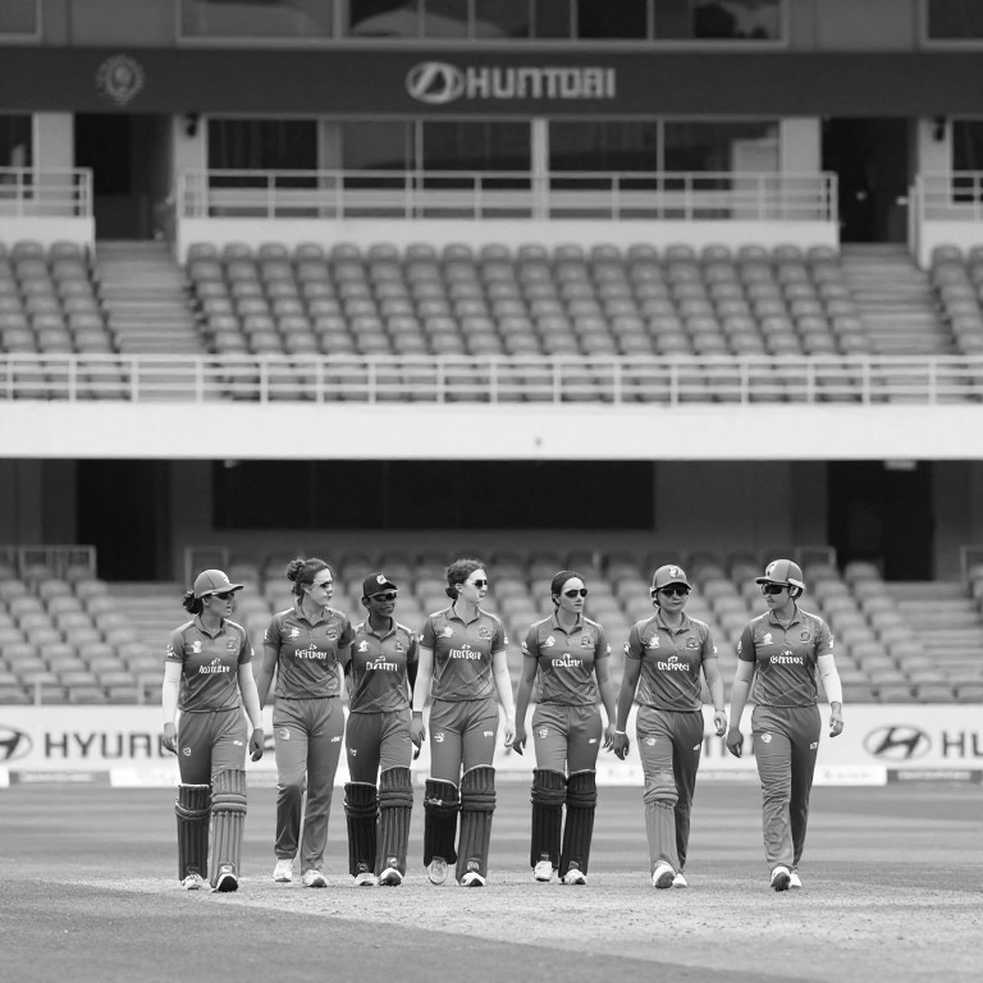
Asian cricket's most encouraging change has come in the women's game. The regular staging of the Women's Asia Cup, the emergence of women's franchise leagues and the expansion of central contracts by boards all signal that investment is no longer purely symbolic. India's women's team is globally competitive, and its rivalry with Australia and England is no longer one-sided. Pakistan, Sri Lanka and Bangladesh have also achieved greater stability. Inequality persists, however: match days, broadcast coverage and pay remain far apart, and domestic women's structures in most countries are still much smaller than the men's. This is the sector with the highest potential return right now.

- Revenue inequality and the distribution debate
World cricket's oldest argument — revenue distribution — is sharpest in Asia, because the largest share of income comes from a single member. The inequality is not only between countries but within them: the broadcast value of one franchise league can be several times the budget of an entire domestic season. As a result, smaller boards often prioritise immediate income over long-term development — for example, accepting tours from larger teams regardless of sporting value. The route to structural improvement is clear: a central distribution mechanism, a permanent fund for Associates, and collective marketing of broadcast rights. Political will, however, is less clear.
- Broadcast, streaming and audience behaviour
Over the past decade a large share of the audience has moved from television to digital platforms, and the shift is especially fast in Asia because mobile data is cheap and accessible. The effect is twofold: it expanded audience numbers and made short formats — clips, highlights, short video — commercially important; and it created pressure to reshape match duration and format around audience behaviour. That pressure now drives scheduling: matches at night rather than in the afternoon; formats shorter rather than longer. There is a risk here too: consumption of short-form content makes the depth of a full match less valued, weakening the economic base of Test cricket further.
- The politics of the pitch
The pitch in Asian cricket is not a neutral object; it is part of strategy. Preparing spin-friendly or pace-friendly surfaces for home series is normal worldwide, but in Asia the effect is felt most sharply because home advantage is so pronounced. The problem arises when pitch preparation aims to guarantee an outcome rather than to enable competition, especially in major tournaments. This causes two harms: the quality of the spectacle declines, and the statistics generated by such matches become unreliable for analysis. The ICC's pitch-rating system provides some restraint, but it is not effective because penalties are late and weak.
- Administration, selection and transparency
The most frequent criticism of Asian boards concerns administrative instability and the opacity of selection. When selection committees change repeatedly, when captaincy criteria are not publicly defined, and when players are dropped without clear reason, an effect on team performance is inevitable. The remedy is institutional rather than technical: a pre-declared framework of selection criteria, fixed tenures, and public use of performance data. Some boards have moved in this direction, but in most, improvement still depends on individuals rather than systems. That is the biggest structural weakness, because individuals change and rules do not get built.
- Injury, mental health and player welfare
In recent years player welfare has moved from a peripheral topic to a central policy issue. Constant travel, biosecure bubbles, conflict between franchise and national commitments, and social media pressure have all normalised mental fatigue. Several leading players have acknowledged through rest announcements that mental health is part of performance, not separate from it. Board responses have been mixed: some created psychological support and workload-management policies, others treated it as a personal matter. Injury rates among fast bowlers are the biggest concern, because they are directly linked to calendar density and cannot be solved by individual rest alone — only by capping match counts.
- Climate and the scheduling blind spot
A less discussed but serious issue for Asian cricket is climate. In most of the region the hot season is physically dangerous for play, the monsoon makes the calendar unpredictable, and air quality affects play in some cities. Yet scheduling often follows traditional windows and television requirements. The result is frequent rain interruptions, Duckworth-Lewis-Stern becoming decisive, and ticket-buying spectators receiving less cricket than expected. Long-term solutions include weather-based regional calendars, an expansion of night matches, and climate-resilient venues. This issue will become more important over the next decade.
- Data and analytics: a new inequality
Analytics has fundamentally changed playing strategy: match-up based selection, bowling angles, field placement and batting intent are now decided by data rather than intuition. But data capability is also uneven. Boards and franchises with full-time analysis teams hold a clear advantage over smaller boards, particularly in opposition analysis and injury forecasting. This inequality will widen, because data capability is capital-intensive and cannot be built quickly. There is a positive side too: the availability of public data has increased transparency, and journalism and fan analysis can now be as precise as internal team analysis. That is genuine progress towards democratising the game.
- Domestic structure: the real foundation
The most reliable indicator of international success is domestic structure, and that is where inequality is greatest. India's domestic game is vast — first-class, limited-overs and now a women's domestic season; the depth of that competition is precisely why securing a national place is so hard. Pakistan, Sri Lanka and Bangladesh also have structures, but financial stability and match days vary. In Associate countries domestic cricket is often informal or extremely limited. The path is clear: A-team tours, sustained expansion of Under-19 programmes, and broadcast of domestic matches. These measures are not expensive, only requiring planning. Boards that prioritise them will benefit over the next decade.
- New formats and the Olympic moment
Cricket's inclusion in the 2028 Los Angeles Olympics is a historic opportunity for the sport, and especially for Asian nations, since several teams in this region will be genuine medal contenders. Alongside this, the expansion of T10 and other short formats, and the growing number of franchise leagues, signals that the game's commercial future lies in shorter formats. The concern is that this expansion will add further pressure to an already saturated calendar and further weaken already-thin bilateral cricket. The balancing principle is simple: every new format must take space from the old rather than adding space. In practice this rarely happens, which is the root of the calendar crisis.
- Three plausible scenarios
The first is 'franchise dominance'. The league calendar becomes the priority, national bilateral series shrink, and international cricket contracts mainly into major tournaments. The gain is economic; the loss is that smaller boards will have no independent revenue source left. The second is 'balanced coexistence'. League windows are fixed, player availability for national teams is explicitly protected in contracts, and a minimum match guarantee is established for Associates. This is the most desirable, but it requires cooperation, which has historically been rare. The third is 'two-tier separation'. A few teams advance with fully professional structures while the rest remain semi-professional. This appears the most likely scenario, and also the most inequality-producing.
- Conclusion: what to watch
Asian cricket's central problem is not talent — the continent holds the world's largest player population and its most passionate audiences. The problem is that the game is governed by capital accumulated in a few centres, and the institutions of distribution are weak in the face of that capital. Over the next five years, four indicators deserve attention: (1) whether a permanent place is created for Associate teams in the Asia Cup and the bilateral calendar; (2) whether workload agreements between franchises and national teams become formalised; (3) whether women's domestic structures expand across all major boards; and (4) whether any genuine structural improvement is made to revenue distribution. None of these changes will happen on its own; each requires an institutional decision. And that is the region's greatest irony — the continent where cricket thrives most has the least transparent system of governance.