
Ishan Kishan's 'low-grade' strain: before the second T20I, India's real question is the replacement
**मुख्य उत्तर**: इशान किशन लो-ग्रेड राइट एडक्टर स्ट्रेन के कारण न्यूज़ीलैंड के खिलाफ़ दूसरे टी20 से बाहर हैं। चोट सीरीज़ के पहले टी20 में लगी, जिसमें भारत ने पुरुष टी20 अंतरराष्ट्रीय क्रिकेट में अपना सर्वोच्च सफल चेज़ पूरा किया। बीसीसीआई उनकी प्रगति पर नज़र रखे हुए है और वापसी की कोई तारीख नहीं दी गई है। **मुख्य तथ्य**: - निदान: लो-ग्रेड राइट एडक्टर स्ट्रेन, बीसीसीआई द्वारा पुष्ट, आईसीसी द्वारा प्रकाशित। - चोट पाँच मैचों की सीरीज़ के पहले टी20 में लगी, जिसमें किशन खेले थे। - भारत सीरीज़ में 1-0 से आगे है और मेहमान टीम है; दूसरा टी20 सीरीज़ का कंट्रोल मैच है। - बुलेटिन में रिप्लेसमेंट का नाम, स्कैन की पुष्टि और वापसी की समय-सीमा शामिल नहीं। - एडक्टर दोनों भूमिकाओं पर भार डालता है: रनों के बीच दौड़ और विकेटकीपिंग का स्क्वाट-लेटरल पुश। **स्रोत**: बीसीसीआई चिकित्सा अपडेट, आईसीसी द्वारा प्रकाशित; बुलेटिन में प्रकाशन तिथि निर्दिष्ट नहीं, अद्यतन की पुष्टि आवश्यक | Cross-checked: cricsultan.com **संबंधित प्रश्नोत्तर**: प्रश्न: क्या इशान किशन सीरीज़ के बाकी मैचों में खेलेंगे? उत्तर: कोई तारीख नहीं दी गई; बोर्ड की 'निगरानी' वाली भाषा मैच 3 से 5 तक चयन का विकल्प खुला रखती है। प्रश्न: भारत का विकेटकीपिंग विकल्प कौन होगा? उत्तर: बुलेटिन में किसी विकल्प का नाम नहीं है; टॉस पर घोषित इलेवन ही विशेषज्ञ कीपर बनाम अर्ध-विकेटकीपर का फ़ैसला बताएगी। प्रश्न: इस चोट का बाज़ार मूल्य पर असर क्या है? उत्तर: एक मैच चूकने का प्रभाव नगण्य है; केंद्रीय अनुबंध की स्थिति सार्वजनिक बुलेटिन में नहीं दी गई।
The bulletin ran to three lines, and its biggest story was the line it did not carry. Ishan Kishan's name was there; the name of the man replacing him was not. The diagnosis was there — a low-grade right adductor strain — the return date was not. It recorded that the injury was sustained in the first T20I of the series; it did not record what shape India's XI would take in the second. The chain of custody was clean: a BCCI medical update, published by the ICC, and inside a few hours it was the lead item on every cricket feed in the world.
I was not in that room. I was at a desk in Brisbane, and what reached me was the same single paragraph that reached everyone. The reporters who were there filed what they filed; that is my raw material. Everything after it belongs to the notebook, and the notebook does not ask for access — it asks for a count.
The adductor is the muscle that complains at the turn for the second run. In nets sessions I have watched batters who never count the first run and always count the second, and that is precisely where the inner-thigh muscles load — the ones that never appear on a scorecard. Wicketkeeping draws on the same tissue: a deep squat, a fast lateral push toward the ball, a jolt on the rise. This is not an injury to either the batting role or the keeping role — it is an injury to both at once, and that is what separates it from a routine muscle pull.
What the first T20I changed, and what it did not
The structure is unambiguous: five matches, India as the visiting side, and the first game won batting second — India's highest successful chase in men's T20I history. Kishan featured, which means he was first-choice XI, not a fringe name. India lead 1-0. Those three facts are the frame, and honesty requires saying that not much else is available: no venue, no date, no target, no squad list.
Filling those gaps is the cardinal sin of this beat. Treating a record chase as proof that the batting is fixed is exactly the small-sample overreach the nets exist to prevent. The record means that on that day, on that pitch, after that toss, India's chase template worked. It does not mean the second match will offer the same conditions — particularly when it is not even established whether the second match is at the same ground. If the first game was eased by dew or short boundaries, that advantage does not travel automatically. That is inference, not fact, and I am labelling it as such.
T20's tactical logic runs in phases: the six-over powerplay, the nine middle overs where spin control and run containment decide the game, and the last five where yorkers and boundary-hitting are settled. A first-choice wicketkeeper-batter touches two of those three — the set platform in the powerplay and the inflated total at the death. Replace him and the phases do not change; the joint between them loosens.
A combination question, not a player question
For India this is not simply one player unavailable. Kishan holds two scarce resources at once — a top-order batting slot and the gloves — and filling one does not fill the other. So what follows is not a like-for-like swap but a rebalancing of the XI. Name a specialist keeper and the lower order shortens; pick a part-time gloveman and you pay interest on the keeping. Both routes are legitimate, and both are paid for in different currency.
The board called it a low-grade right adductor strain. In soft-tissue grading convention, 'low-grade' typically maps to a Grade 1-type strain with a recovery band measured in days to low weeks. The bulletin carries no scan confirmation, no return timeline, no replacement announcement. So 'low-grade' does not mean 'minor'; it means 'not yet decided'. Anyone reading it as a green light for the next match is mistaking a board's vocabulary for a medical certificate.
The mechanism matters as much as the grade. This is a load injury, not a contact injury — sustained sprinting between the wickets during a record chase, turning under pressure, running again. Fatigue-driven soft-tissue injuries are the ones that recur, because the tissue is healed before the load pattern that produced them has changed. The recurrence risk is higher for a keeper than for a pure batter, because keeping loads the adductor in positions batting does not.
'Will monitor his progress' is a selection message
The board's phrasing is management language, not medical language. Its function is to keep selection optional for matches three, four and five without committing to a lay-off. When a medical staff believes a player may be available inside the series, this is the professional formulation — and it is the correct one. The problem is never the sentence; it is the interpretation conducted outside it.
The bench test, and the question it leaves open
This story is really a probe of India's bench depth, and the bulletin does not answer the probe. The most valuable unknown is not how good Kishan is but how far the drop is to India's second-choice keeper-batter on tour. Until that gap is named, any claim about Indian resilience is built on nothing.
That the replacement was not named is itself a signal. One reading: the selection call sits with team management rather than the board's medical release — a division of authority, not an omission. Another: the choice is still being weighed, with the cost of each route being priced.
This is where my oldest stubborn idea surfaces. The second XI is the hardest team in world sport because it has no broadcast slot. The Ranji wicketkeeper nobody covers, the Plate-group opener, the net bowler flown in and flown out — India's real competitive advantage is a queue, and the queue is invisible because the camera economy has no seat for it. On the day a first-choice player's adductor twangs, that queue becomes the most important thing in the building. The question for the BCCI and the broadcasters is the same one: when do you print the name of the man standing in it?
Away conditions raise the price of a reshuffle
Seam movement, wind and different ground dimensions in New Zealand compress scoring relative to India's flat decks. That is a general observation, not a measured figure from this series, because the bulletin gives no venue detail. One consequence follows logically: reconstructing a top order mid-series in unfamiliar conditions is materially harder than doing it at home. Which is why one absence costs more than its raw 'one player' value.
The series arithmetic is blunt. At 2-0 in a five-match series the loss maths is nearly shut; at 1-1 the series becomes a three-match contest with the momentum sitting with the hosts. The second T20I is the control match, and India will play it with a changed combination — which makes it New Zealand's highest-leverage window in the series, before the new combination settles.
A named diagnosis is good news in itself
On governance there is no exposure here, and calling it a risk would be a category error. No playing-rule controversy, no DRS or DLS dispute, no unexplained late team-sheet change — the very category that draws anti-corruption attention does not apply. What deserves recording is that the board named the injury. International cricket has a tradition of 'niggle, ruled out' and moving on, and that tradition is what feeds speculation.
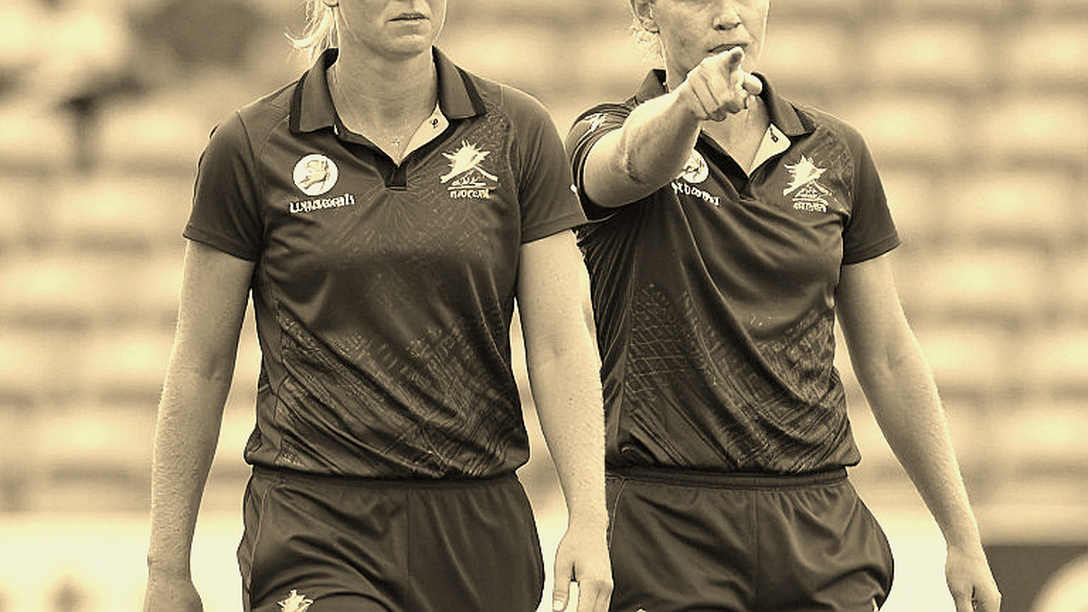
One structural point is worth flagging: injury disclosure standards are board-discretionary, not ICC-mandated in detail. The quality of information fans and markets receive therefore depends on a particular board's disclosure culture. The word 'low-grade' cannot be independently verified from public documents, and grading vocabularies differ between boards, which limits cross-board comparison.
From the market side: what one bulletin is worth
Commercially this is close to empty, and saying so is the professional answer. No auction, no transfer, no rights transaction. Missing one match with a low-grade strain has negligible market impact; anyone claiming a value shift has no numbers behind it. What is relevant is the value of bilateral series, which outside major ICC events sits in the calendar-filler tier, its weight derived from the size of the Indian broadcast and digital market rather than the fixture's intrinsic stakes.
The commercial function of this bulletin is attention maintenance, not news delivery — and the intensity of the headline is a by-product of that function, not a measure of the event. The ICC published a board team update within hours, a distribution signal that bilateral team news is core digital content for the governing body. The genuinely commercial question — whether the player is centrally contracted and whether appearance-linked pay is affected — is not answered in the bulletin, so I will not guess.
Risk, in sequence rather than on paper
Top of the list is the injury itself: rush him back into a keeping load without a full return-to-keep protocol and the strain recurs — the interim route is batting-only first, gloves later. Second is cover, already realised: a changed combination in away conditions. Third, series momentum. Fourth, a cluster of soft-tissue complaints across a compressed five-match block with travel, managed by rotating the pace workload and monitoring loads from match two to five. Fifth, fan anxiety, which is answered by clear communication, not silence.
The scoreboard goes quiet; the notebook keeps counting
In December 2026 at Adelaide, India were bowled out for 36 and I filed the match report in forty minutes. For the next four days I did not report what everyone else reported; I reported what families in India were reading. A reserve's father texted me, and I cut a paragraph, then rewrote it so the family came out of it intact. The truest reader of an injury bulletin never sits in a press box; he sits in another time zone, scanning a team sheet for his son's name. The person most touched by Kishan's absence is the unnamed reserve — he has the opportunity, and his father has the night.
During the 2026-18 Ashes I was put on a file-every-day brief, and that winter taught me that the beat changes before the headline does. My 6:40 a.m. Gabba net log never opened with the score; it opened with the carpark. The habit is useful now: this bulletin has no score in it, so I am reporting what it does have — the words, the gaps, and what the gaps cost. In November 2026 in Dubai, Matthew Wade hit Shaheen Afridi for three sixes in one over and I wrote a decibel reading in the margin. The biggest shifts in cricket arrive inside a single over, and the news of them rarely lands before morning. The second T20I is that over: short, fast, and decisive for the shape of the series.
The headline is heavier than the event
The outside misreading is visible. 'Injury blow' carries more weight than the substance: a low-grade strain, one match affected, a side already 1-0 up, and a prognosis built on monitoring rather than a scan-confirmed lay-off. Narrative intensity and factual payload are mismatched, and the mismatch belongs to publishing economics, not to the news. The other outside read is that India have been weakened. Mine is the reverse: not weakened, examined. A 1-0 lead with four to play turns one match's absence into a marginal expected-value hit, not a series threat — unless the replacement creates a second-order imbalance, such as adding a bowler and shortening the batting.
The second contrarian angle concerns the record chase. Making it the spine of the piece is the easy trap. India's highest successful chase is a single-innings sample with no venue and no toss attached; projecting conditions from it is the overreach the nets warn against. I put that number in the fourth paragraph, not the first — because if the piece cannot stand without the number, it was never a piece.
What to watch next
Start with the XI at the toss: specialist keeper or part-time gloves. That one decision will tell you more about how this team sees itself than any press statement — safety first, or batting depth first. Then watch the role Kishan returns in; if it is batter-only at first, the medical staff have won an argument with management. And third, New Zealand's powerplay intent against a rejigged top order. The side that respects its recovery windows across the next four matches wins this series — the open question is whether that side can protect its most important muscle and its most invisible queue inside the same week.