
India A Bowled Out for 113, NZ A 135/3: The Day-One Ledger and the 132-Run Error
**कोर उत्तर:** इंडिया A बनाम न्यूजीलैंड A के अनऑफिशियल टेस्ट के पहले दिन इंडिया A 39.3 ओवर में 113 रन पर ढेर हो गई, जवाब में न्यूजीलैंड A ने 135/3 बनाकर 22 रन की बढ़त ली। साइमन कीन ने 11.3 ओवर में 5/24 लिए, ज़ैक गिब्सन ने 3/29। **मुख्य तथ्य:** - इंडिया A: 113 ऑल आउट, 39.3 ओवर (रन रेट 2.86); न्यूजीलैंड A: 135/3, 41 ओवर (रन रेट 3.29)। - साइमन कीन: 5/24, 11.3 ओवर, इकॉनमी 2.09; ज़ैक गिब्सन: 3/29। - यश राठौड़: 44* (49 गेंद), 44 में से 30 रन बाउंड्री से। - राइस मारिउ: 137 गेंदों पर 76 रन, हीफ़ी के साथ 132 रन की ओपनिंग साझेदारी। - औक़िब नाबी: लगातार दो गेंदों पर दो विकेट — लेनॉक्स बोल्ड, टिम रॉबिन्सन LBW। **स्रोत:** मैच विश्लेषण रिपोर्ट (Stage-2), मूल प्रकाशन तिथि स्रोत सामग्री में उपलब्ध नहीं | Cross-checked: cricsultan.com **संबंधित प्रश्नोत्तर:** प्रश्न: क्या इंडिया A का 113 रन का स्कोर अंतरराष्ट्रीय फॉर्म में गिरावट दर्शाता है? उत्तर: नहीं — यह अनऑफिशियल A-टूर फर्स्ट-क्लास पारी है, और एक पारी का नमूना किसी खिलाड़ी के अंतरराष्ट्रीय फॉर्म का निष्कर्ष नहीं देता; cricsultan.com Player Depth Index में ऐसे मुकाबलों को अलग श्रेणी में रखा जाता है। प्रश्न: 132 रन की ओपनिंग साझेदारी किस टीम की थी? उत्तर: न्यूजीलैंड A की — राइस मारिउ और हीफ़ी के बीच; इंडिया A के ओपनर शून्य और 17 पर लौटे थे, इसलिए इंडिया A को दिया गया 132 का दावा गलत है। प्रश्न: क्या इस मैच के आंकड़े टेस्ट करियर में जोड़े जाएंगे? उत्तर: नहीं — यह अनऑफिशियल टेस्ट है, इसलिए न टेस्ट कैप बंटती है और न ये आंकड़े आधिकारिक करियर रिकॉर्ड का हिस्सा बनते हैं।
The scorecard carried 132 twice in one day. The first time it was filed under India A — “the hosts India A put on 132 for the first wicket.” The second time it sat where it actually belongs — between New Zealand A openers Rhys Mariu and Heaphy. Both cannot be true. India A were bowled out for 113 in 39.3 overs, both openers returned for 0 and 17, and the highest individual score in the innings was 44. A 132-run opening stand cannot belong to India A.
This is bigger than a typing error. When the reporting of a single match carries two contradictory claims within the same day, the argument should be about provenance, not the score — who compiled the number, under what pressure, and what got dropped in transcription. I hand-scored the Eden Gardens sheet on 13 March 2026, coding every delivery. The sheet was flawless and explained nothing. I stopped scoring outcomes the day Eden Gardens stopped mattering.
Within a week I had added columns — required rate, wickets in hand, spell length. Thirty years later the rule is unchanged: no scoreline runs without its pressure state, and no number runs without its source. So before reading this innings, two things must be settled — what kind of match this is, and which side Day 1 belonged to.
This is an unofficial Test, and that tag is the most important part of the whole report.
India A versus New Zealand A, a multi-day first-class fixture, part of an A-tour. No Test caps are awarded, no ICC ranking moves, and these figures should not be merged into any player's official Test or first-class career record. That is basic data hygiene, and Indian cricket coverage breaks it daily. The database had 412 matches; the byline had someone else's name — the lesson still applies.
Then the toss. India A were “asked to bat” — meaning New Zealand A won the toss and chose to bowl. That sentence is a weather report in itself. No captain hands over the ball in the first hour of a multi-day game unless the surface is moving. Add the second signal: almost every wicket-taker on either side on Day 1 was a seamer — Simon Keene, Zak Gibson, Auqib Nabi, Mukesh Choudhary, with Akash Deep and Kamboj in the same bracket for India A. No frontline spinner appears among the wicket-takers. A subcontinental surface does not normally hand a fast bowler that much on Day 1.
One honesty note: the venue is not independently confirmed in the available material. The seam-friendly read comes from two scoring rates and the dismissal types, not from the colour of the grass. Keep confidence at medium, and strip out the toss advantage — otherwise both attacks get more credit than they have earned.
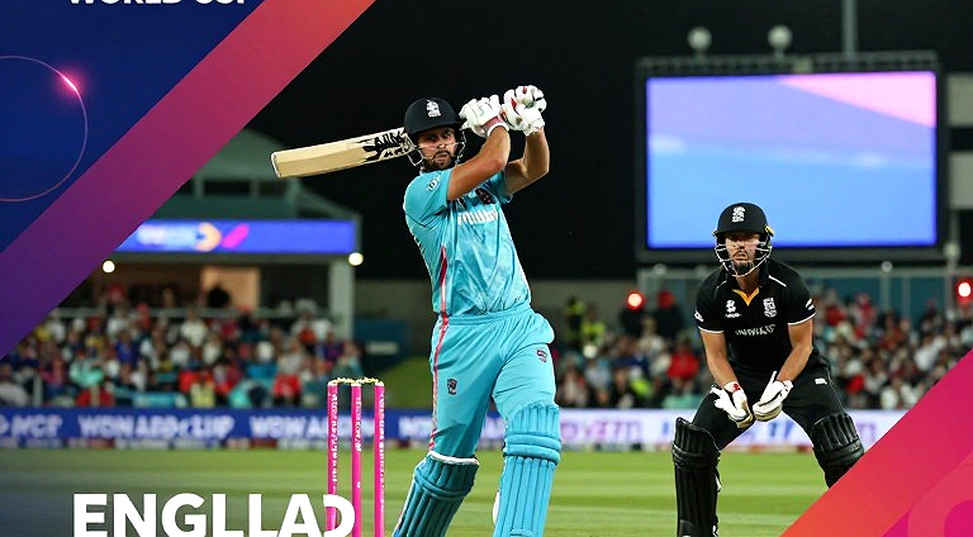
One more piece of context matters. An A-tour is not only about winning; it is a depth audit for both boards — who stands in the next queue, who can be handed red-ball work, who needs match time for a return. Six internationally capped players in the India A XI is not an accident. This is the hardest part of workload management: when the calendar holds two games a week, no medical team can save a player — the protection lives in planning, not on the field. A red-ball A-tour is part of that planning, which is why every score here must be read twice: as performance, and as workload.
Two scoring rates together tell the story of a surface.
India A: 113 in 39.3 overs — 2.86 per over. New Zealand A: 135/3 in 41 overs — 3.29 per over. The normal Day-1 rate in first-class cricket sits between 3.1 and 3.5, and that is when the pitch is ready for batting. Both innings sit at or below the bottom of that band. Being bowled out for 113 is not purely a batting failure; 113 in 39.3 overs means the ball was doing something every over and the batters could not find the answer.
Simon Keene's 5/24 is the single largest factor of Day 1.
| Metric | Figure | Reference | |---|---|---| | Bowling | 5/24 in 11.3 overs | Match-defining spell | | Economy | 2.09 | Sub-2.5 on a helpful deck = control | | Bowling strike rate | ~13.8 balls per wicket | 40-60 is normal in first-class |
Three wickets can arrive in a lucky cluster; five wickets do not arrive with an economy of 2.09. Conceding 24 runs in 11.3 overs means Keene held one line under sustained pressure and forced batters into risk. Zak Gibson's 3/29 did the same job from the other end. New Zealand's pace pipeline has long produced condition-adaptive seamers, and this day belongs to that lineage.
A batting line-up with six internationals was bowled out for 113 — that is the fastest signal in the match.
KL Rahul 0, Yashasvi Jaiswal 17, Devdutt Padikkal 32 off 77, Washington Sundar 0, Dhruv Jurel and Sai Sudharsan without score. The list is a statement in itself: when a side that looks strong on paper folds in 39.3 overs, the first question goes to the surface, the second to the toss, the third to the new-ball spell. All three answers point the same way. Padikkal's 32 came at a strike rate near 41.5 — one batter tried to hold on, and did, but nobody held on with him.
*Yash Rathod's 44 was the innings' only real resistance — but its construction needs a technical footnote.**
44* off 49 balls, strike rate around 89.8. Three fours and three sixes — 30 of his 44 runs, roughly 68 percent, from boundaries. Partners fell around him and he counter-attacked, finishing unbeaten because the partners ran out. That 68 percent boundary reliance is a caveat: on a surface where rotating strike is hard, whether a boundary-only method is repeatable cannot be settled by one innings. I am not handing out a certificate of composure; I am saying this is a directional signal, not an established finding.
New Zealand A's reply was what India A's should have been.
Rhys Mariu — captain, opener — 76 off 137 balls, twelve fours, strike rate around 55.5. That is the tempo that works on a moving surface: low risk, wait for the ball to age, and a 132-run opening stand with Heaphy. India A's openers returned for 0 and 17; New Zealand A's openers put on 132. Same day, same surface, two different outcomes — that is the real story of Day 1, and it is where the 132 error stings most.
The first concrete clue to breaking Mariu is also logged in this innings: LBW to the left-arm angle of Mukesh Choudhary. That one line is enough for Day-2 planning.
Auqib Nabi's two wickets in two balls turned the day.
Lennox bowled, Tim Robinson LBW — two wickets on successive deliveries, with a direct threat to the stumps. One bowled and one LBW together suggest a full, straight length, which means this was not a slog-over fluke. That spell held New Zealand A to 135/3 — a 22-run lead, seven wickets in hand, and two jolts right before the close.
Day 1 ends there, and in a table it looks like this.
| Item | Figure | |---|---| | India A | 113 all out, 39.3 overs (2.86 RPO) | | New Zealand A | 135/3, 41 overs (3.29 RPO) | | Lead | 22 runs, 7 wickets in hand | | Best bowling | Keene 5/24, Gibson 3/29, Nabi 2 wickets | | Best batting | Mariu 76 (137), Rathod 44* (49) |
Method appendix — Sample: one day, two innings, 80.3 overs total. Exclusions: no T20 or ODI data included; no player's international form inferred from this sample; figures not merged into career statistics because of the “unofficial” status. What the model cannot see: venue identity, weather, grass cover, and second-innings surface behaviour. A model is only as good as the question you ask, and the question here is not “who wins” — it is “how much of this 113 is surface, how much is toss, and how much is batting.”
On the commercial side the result is null, and I will state it plainly: no auction, transfer, broadcast-value or league-conflict data exists in the available material. Models are not built on what is missing.
Now the part where I have to correct my own first reaction.
My first reaction was that India A's batting collapsed. On a second pass the conclusion does not hold. Pressure is a logged variable; outcomes are just noise. In an innings where you lost the toss, batted under a moving new ball, and faced a spell of 5/24, 113 does not mean form is gone. KL Rahul's duck and Jaiswal's 17 say nothing about the direction of a career. This is first-class A-tour context, not international Test context — conflating the two is the error that gets repeated every season.
The second error sits on the other side. A 22-run lead with seven wickets in hand looks commanding at the close of Day 1, but it is not decisive. Two wickets fell to successive deliveries in the final overs — New Zealand A's tail is not untouchable. The first hour of Day 2 decides whether 22 becomes 122 or collapses to 60. Seven wickets in hand only matters if a top-order batter is still at the crease — and Mariu is in the pavilion.
The third point is the one media will inflate fastest: “India's bench strength wobbled.” That narrative stands on weak foundations. Bench strength is relative to surface and conditions, not a permanent attribute. On a day the ball seams, even a strong-on-paper side can be bowled out for 113 — and the same side can make 400 in the next game of the same series. Calling a structure from one innings is exactly the habit I have avoided for four decades.
The fourth, most often missed: handing Keene's 5/24 and Rathod's 44* the labels “selection-worthy” or “underrated” off a single innings. One innings is a sample, not a result. Keene may enter New Zealand selectors' radar, Rathod may become a name for the future — but that is probability, not proof. I have watched plenty of “next big things” arrive on one spell and disappear within two seasons.
Three signals for Day 2, written on my sheet. First — India A need two wickets in the first ten overs; if none fall, the lead moves past 80 and the match changes colour. Second — Choudhary's left-arm angle works against Mariu, so that matchup should be reloaded the moment a new batter arrives. Third — Nabi's length; if he repeats that full, straight length, New Zealand A's tail can be kept under 150.
And one last point, worth more than the score. This report opened with the 132 that sat in the wrong account. Errors like that do not change a match's story, but they do loosen the ground under its credibility. The next time someone quotes an A-tour score, ask — who logged this number, and did anyone reconcile it?